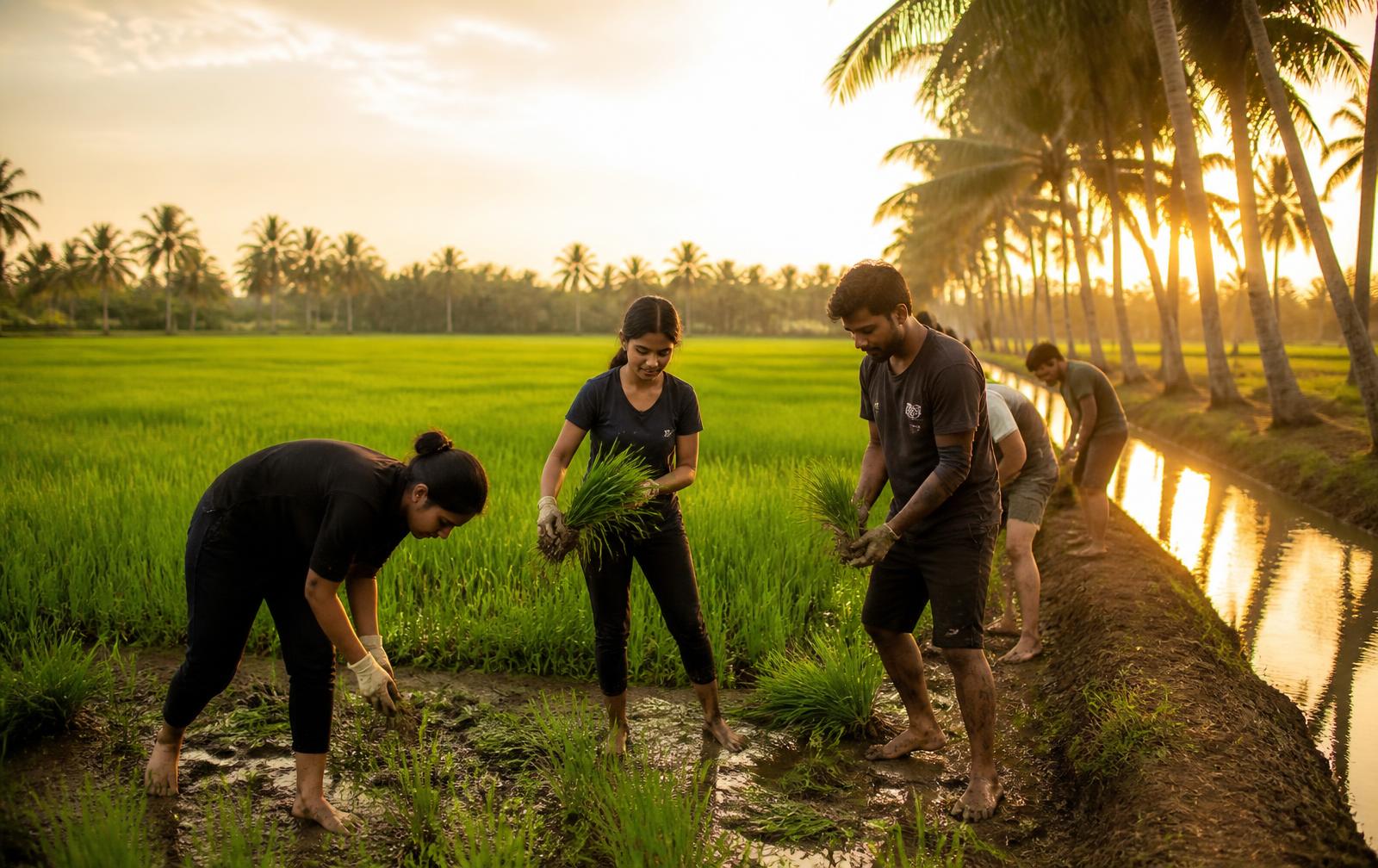
India
Farming is not inherited here. It is joined.
YuvaKrishi connects people who have no land but want to learn organic farming with farms across India that need real hands in the field — paddy, wheat, millets, sugarcane, cotton, coconut, banana, mango, vegetables, spices, tea, beekeeping, agroforestry and everything in between.
How it works
From an empty field to real experience with the earth.
- 1A farm postsThe plot, crop and hands needed.
- 2You find itSearch by place and crop, reach out.
- 3You meet the soilSoil life, plant life, water, season.
- 4Experience becomes proofYour field time becomes a credential.
Four steps, no accounts, no middlemen — the farm posts, you find it, you show up and learn the earth first-hand.
Land without hands, hands without land
Farms are short of help while young people are short of land. YuvaKrishi puts the two in the same field.
Organic by practice, not by paperwork
Rice-straw compost, neem and cow-dung sprays, bunds left wild for predators — methods that fit Indian soil and water.
Real experience with the earth
Soil life, plant life, water and season — learned by doing. The time you spend in the field is recorded and becomes proof of experience you actually earned.
What you gain
More than a day in the field.
Verified hours
Every approved day is logged and can be shown to employers, training institutes, or farmer networks.
Free certificates
Earn Field Hand, Practitioner, and Steward credentials at 50, 150, and 400 hours — no course fee.
Community & mentorship
Join WhatsApp groups, farm meetups, and an alumni circle of people building rural careers.
Path to paid work
Verified volunteers are the first people farms call when paid seasonal roles open up.
Adopt-a-plot
Some land is tired, not finished.
Salt-crusted, fallow, or simply too much for one family to manage — our Rejuvenate programme pairs those plots with volunteers who rebuild the soil season by season.
How rejuvenation worksLearn first
Farming here has its own grammar.
Rice-straw composting, alternate wetting and drying, saving flood-tolerant seed, farming next to aquaculture ponds. Short lessons, written for Indian fields.
Start with the basics